
The Concierge Chronicles: What You Will Not Approximate
The Concierge Chronicles | Issue № 22

Dear Friends,
A conventional moonphase complication deviates from the actual moon by one day after a couple of hundred years. An exceptional one - the kind found in a fifty-thousand-franc Swiss complication - deviates by one day after 122 years. Andreas Strehler’s deviates by one day after two million. The Guinness Book of World Records confirmed this in 2014. He did not describe it as a feat. He described it as the problem, solved.
Monaco approaches. The circuit fills in the first week of June, and the collector calendar tightens around it: Bonhams in the paddock, dinners in the hills above the harbour, the yachts in port ordered by length and ambition. Before that weekend, this issue takes a different measure of time - the age of the moon to three hours, a piece of Danish silver that the German design establishment never catalogued, and a Swiss watchmaker in a small canton who has spent thirty years refusing the standard margin.
This issue follows what cannot be approximated.
The Briefing: What’s Happening in Luxury - The Independent Watchmaker Market Consolidates
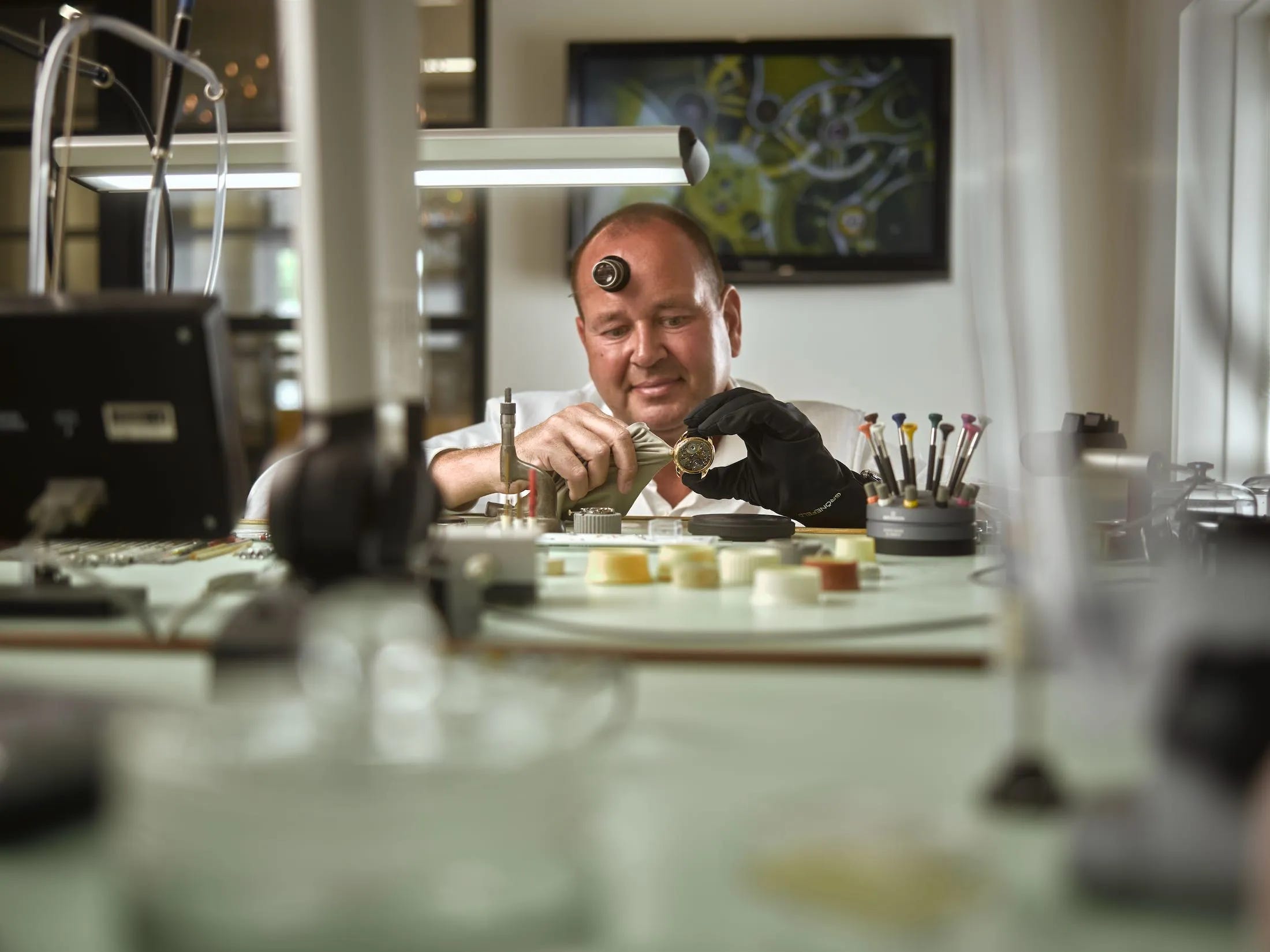
The independent watchmaking category - Grönefeld, F.P. Journe, Philippe Dufour, Andreas Strehler, Rexhep Rexhepi - has been the watch market’s strongest performer for three consecutive years. Sotheby’s and Christie’s both now dedicate sections of their Geneva sales specifically to independent makers. The dynamic is straightforward: production in single or double digits annually, waiting lists measured in years, and consistent secondary-market premiums over retail. The key shift: collectors are acquiring these watches as cultural objects, which paradoxically makes their long-term financial case stronger. Objects bought for the right reasons tend to hold.
The Luxury Digest: On Our Radar
Where we track the pulse of craftsmanship, culture, and hospitality.
🏛️Artisinal Craftsmanship: The Maker
There is a standard moonphase mechanism. It displays the lunar phase by rotating a disc behind an aperture. Over the 29 days, 12 hours, and 44 minutes of a synodic month, it accumulates an error. A good standard mechanism drifts by one day every couple of hundred years. An exceptional one, of the kind found in serious Swiss complications, drifts by one day every 122 years.
Andreas Strehler found both figures inadequate.
Andreas Strehler, Sirnach, Switzerland


His Sauterelle à Lune perpétuelle deviates from the actual moon by one day after two million years. The Guinness Book of World Records verified this. He works from Sirnach, a quiet town in the Swiss canton of Thurgau, and his studio tagline reads: “Engineer for the Brands - Watchmaker for the Few.” Both halves are literal. For decades, Strehler has engineered movements for major Swiss manufacturers - the invisible expert behind names he is contractually unable to name. The watches he produces under his own mark are numbered in the dozens per year.
The Lune exacte addresses a secondary problem that other watchmakers have not solved. Every moonphase display - no matter how accurate its mechanism - shares a common limitation: it can only be read and set precisely at new moon or full moon. At any other point in the cycle, the wearer is estimating. Strehler’s response is the Moon Vernier Scale, a secondary indicator at six o’clock that shows the age of the moon in days, with an inner vernier ring that resolves the reading to three hours. The vernier operates on the same principle as a precision calliper: two scales with slightly different graduations whose alignment gives the exact measurement. At any moment, day or night, the wearer can read the moon’s age to within three hours.
The watch also carries Strehler’s remontoir d’égalité, a constant-force mechanism first developed for the Sauterelle. Conventional escapements receive energy in impulses of varying strength - the mainspring delivers full force when wound and diminishing force as it runs down, meaning the balance wheel oscillates under unequal conditions throughout the watch’s cycle. Strehler’s satellite gear corrects this: every second, a star-shaped wheel releases exactly the same quantity of energy to the escapement, regardless of the mainspring’s remaining power. The Swiss Anker escapement, perfected over 200 years, now receives the consistent energy it was always designed for.
Food for Thought: His watches are commissioned through conversation, built over months, and priced accordingly. The relevant question is not whether they are worth the money. It is whether anything else at this price resolves problems of this specificity.
⌚ The Timepiece
A. Lange & Söhne Datograph Up/Down (ref 405.035)


The Reference: 405.035 Datograph Up/Down, 41mm platinum or white gold, manually wound, flyback chronograph with mainspring state indicator
The Thesis: The Datograph is the watch A. Lange & Söhne built because they found existing flyback chronographs insufficiently precise. The column wheel, the precision coupling, the jumping minute counter - each component addresses a specific mechanical limitation that other manufacturers had accepted as the cost of making a chronograph. The Up/Down indicator adds a continuous display of the mainspring’s remaining power, so the wearer knows not just the time but the state of the mechanism. Like Strehler’s remontoir, it is engineering addressed at a problem most competitors did not bother to name.
Market Position: EUR 55,000–90,000 pre-owned depending on metal and condition. The platinum references command a premium. Pre-owned prices have been firm for a decade and the current production versions are significantly more expensive.
Where to Acquire: Ask and we will connect you
🖼️ The Work
Thomas Joshua Cooper: Photographs
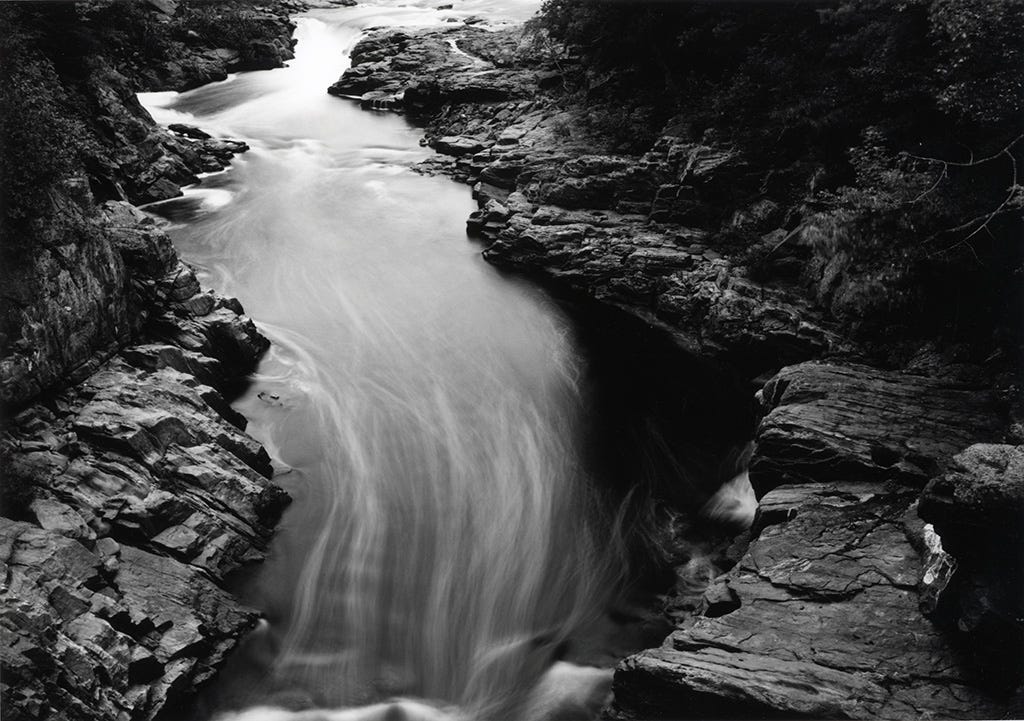
Cooper is a Glasgow-based American photographer who has spent forty years making single long-exposure photographs at the Earth’s geographical extremities. One exposure per location. He travels to the farthest point of a coastline, sets up his 1898 field camera - always the same one - and makes a single four-to-eight-minute exposure of the horizon. No retakes. The prints are silver gelatin, made by Cooper in his own darkroom. The light and the surface of the water are never the same twice, and the camera records what was there, not what the photographer intended.
The Investment: Works from the major series (The World’s Edge, Atlantic Margin): GBP 8,000–25,000. Vintage prints from the 1970s–80s: GBP 3,000–12,000. Cooper’s work rewards slow looking in a way that transfers poorly to a screen - which means it is systematically under-valued in the digital secondary market and fairly priced in person. His primary dealer is Ingleby Gallery in Edinburgh; secondary market appearances at Christie’s and Bonhams photograph sales are the acquisition path.
Where to Find: Ask and we will connect you
🪑 The Design
Zeiss Ikon Contax IIa (1950–1961): The Camera as Instrument
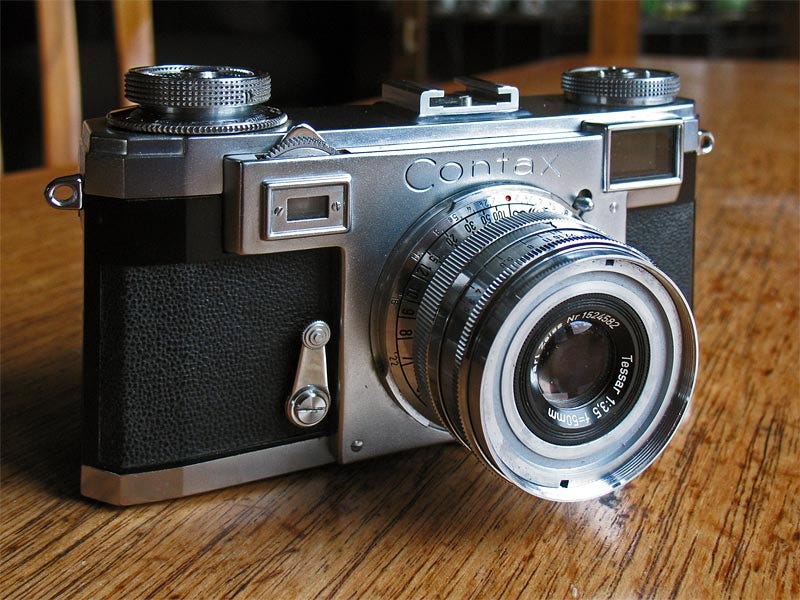
The Contax IIa was the post-war Zeiss response to the Leica M3 - a rangefinder camera built to the tolerances of a precision optical instrument rather than a consumer product. The rangefinder mechanism achieves focusing accuracy to hundredths of a millimetre. The shutter used a titanium foil curtain, a Zeiss innovation adopted decades later by other manufacturers. The lenses - Biogon, Planar, Sonnar - are still used by photographers sixty years after production ended because the optical calculations have not been improved upon.
The Investment: Clean working Contax IIa bodies: EUR 350–750. The Biogon 35mm f/2.8: EUR 300–600. The Planar 50mm f/1.5: EUR 250–500. Against equivalent Leica M bodies and lenses, the Zeiss system trades at a 70–80% discount for equivalent optical quality. The undervaluation is geographic and cultural: Leica’s identity was built in English and American markets; Zeiss’s precision reputation is better understood in German-speaking ones.
Where to Find: Ask and we will connect you
📍 The Place
Waldhaus Sils - Sils Maria, Engadin, Switzerland


A 150-room hotel above the Silsersee in the Upper Engadin, family-run since 1908. No WiFi in the rooms. A library of 15,000 books. In winter, the lake freezes and the light at 1,800 metres is the sharpest in Europe. Nietzsche spent seven summers in Sils Maria and the hotel holds his correspondence in its archive.
The Draw: The Waldhaus operates on the premise that a place earns its distinction through consistency rather than renovation. The same family, the same rooms, the same sequence of meals, for 118 years. From here, Sirnach — where Strehler works — is 90 minutes by car. The watchmaker and the hotel share the same logic: the appropriate thing, maintained.
🗓️ The Events Brief: Where the Smart Money is Heading
Monaco Grand Prix: 5–7 June 2026, Formula 1
The collector weekend: Bonhams motorcar sale, watch consignments, the harbour. The principality in the fortnight before the Grand Prix is quieter and more interesting than the race weekend.
🏨 Boutique Hotels: Independent & Authentic
Schloss Münchenwiler - Murten, Switzerland
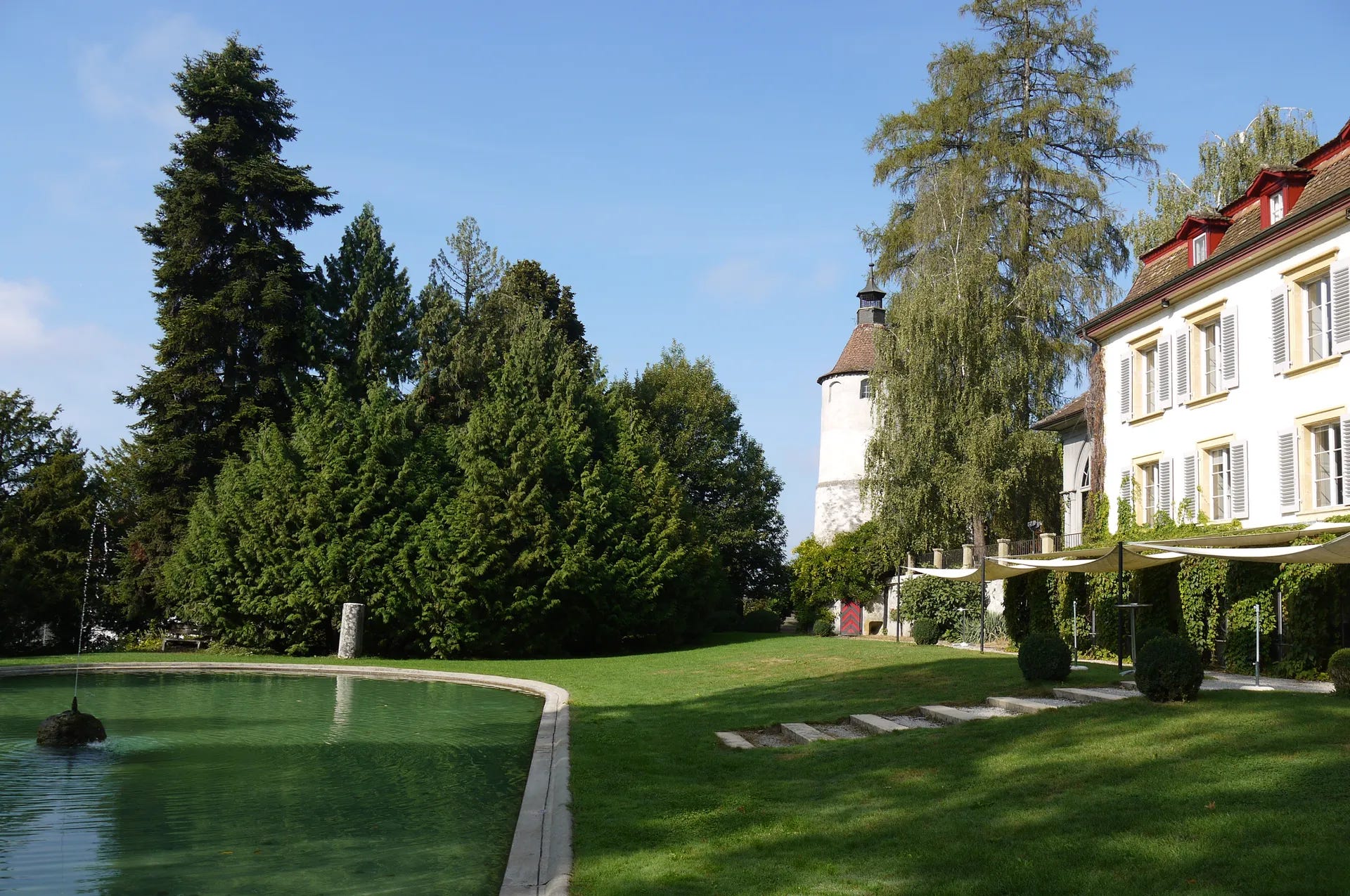
A medieval castle on a hill above the village of Münchenwiler, between Murten and Bern. Twelve rooms. The building dates to the 12th century and has operated as a hotel since 1848. Stone walls, deep window recesses, a dining room with a view over the Murten plain that has not changed materially since the battle of 1476.
The Draw: Murten is a perfectly preserved medieval town at the edge of a lake. The castle hotel above it has been receiving guests for 175 years. From here, Sirnach is 90 minutes by road. The appropriateness of the combination — the watchmaker and the medieval castle, both the product of extreme longevity — requires no further explanation. Rates from CHF 200/night.
De Witte Lelie - Antwerp, Belgium
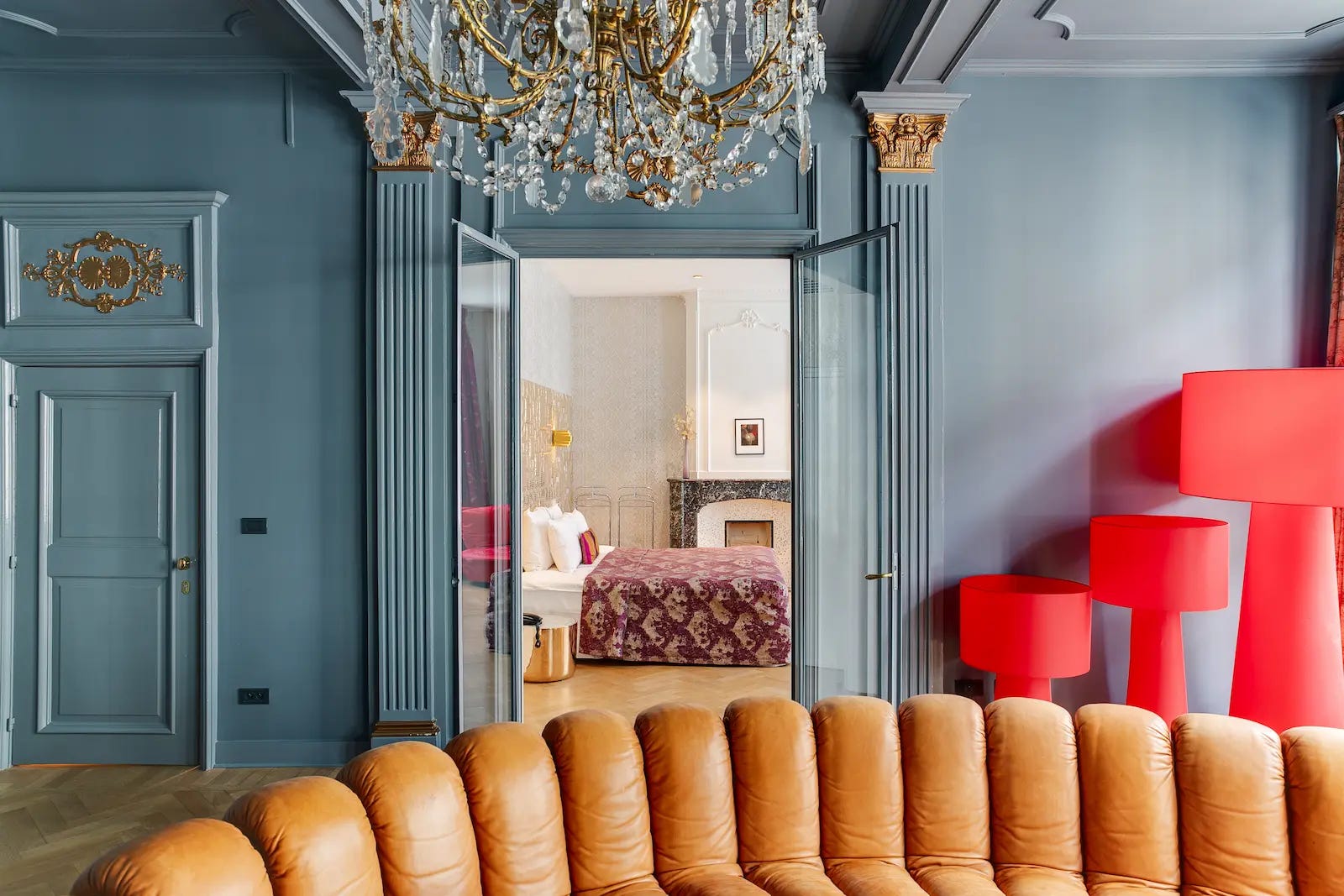
Three joined 17th-century townhouses in the heart of Antwerp’s historic centre, ten rooms, family-run. The furnishings are a considered collection of Flemish antiques and contemporary design - not a decorator’s statement but a private house that has been receiving guests for thirty years. Breakfast is served in the original stone cellar.
The Draw: Antwerp is one of Europe’s most overlooked hotel cities. De Witte Lelie applies the same precision to hospitality that Antwerp’s diamond trade applies to gemology: the quality of the light, the weight of the object, the exactness of the setting. Rates from EUR 275/night.
🍽️ Culinary Journeys: For the Pleasures of the Palate
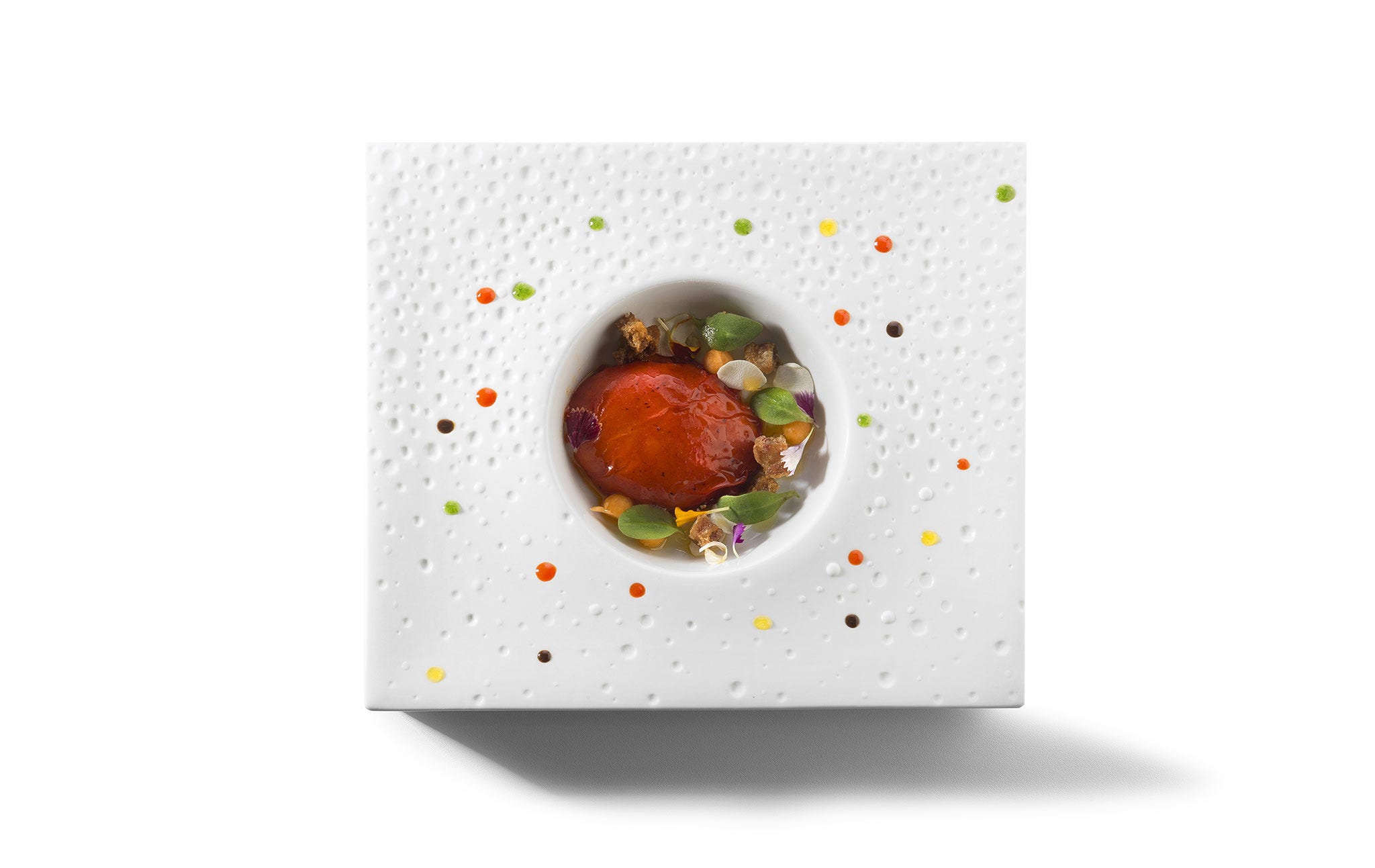
Three Michelin stars since 1989. Juan Mari Arzak and his daughter Elena cook Basque cuisine with a precision that does not announce itself. The kitchen maintains a laboratory: a documented archive of over 1,200 ingredients, each with notes on its properties, pairings, and behaviour under heat. The menu changes seasonally, driven by what the archive surfaces rather than by trend. Arzak has held three stars for thirty-five years without altering its fundamental logic.
The Draw: The Arzak laboratory is not a marketing concept. It is a working document - a catalogue of how ingredients behave, assembled over four decades. Elena Arzak now runs both the laboratory and the kitchen. The precision is exact and invisible: the food does not taste like research. It tastes like the result of research conducted on behalf of the person eating it. Reserve four to six weeks out.
Stucki - Basel, Switzerland

Chef Tanja Grandits, two stars. A restaurant in a 19th-century villa in the Bruderholz quarter of Basel, set in gardens. Grandits cooks from colour and spice, a personal vocabulary that has been developing in this kitchen for fifteen years. The wine list is substantial on Swiss and Alsatian labels rarely found outside the region.
The Draw: Basel is 90 minutes from Sirnach. Stucki earns its visit independently: a sustained culinary intelligence, a still room, and a wine list worth time with the sommelier. Those combining a journey to Strehler’s atelier with time in the city will find the sequence - the watchmaker in the morning, the kitchen in the evening - coherent. Rates: tasting menu from CHF 195.
🏎️ Cars: The Collector’s Drive
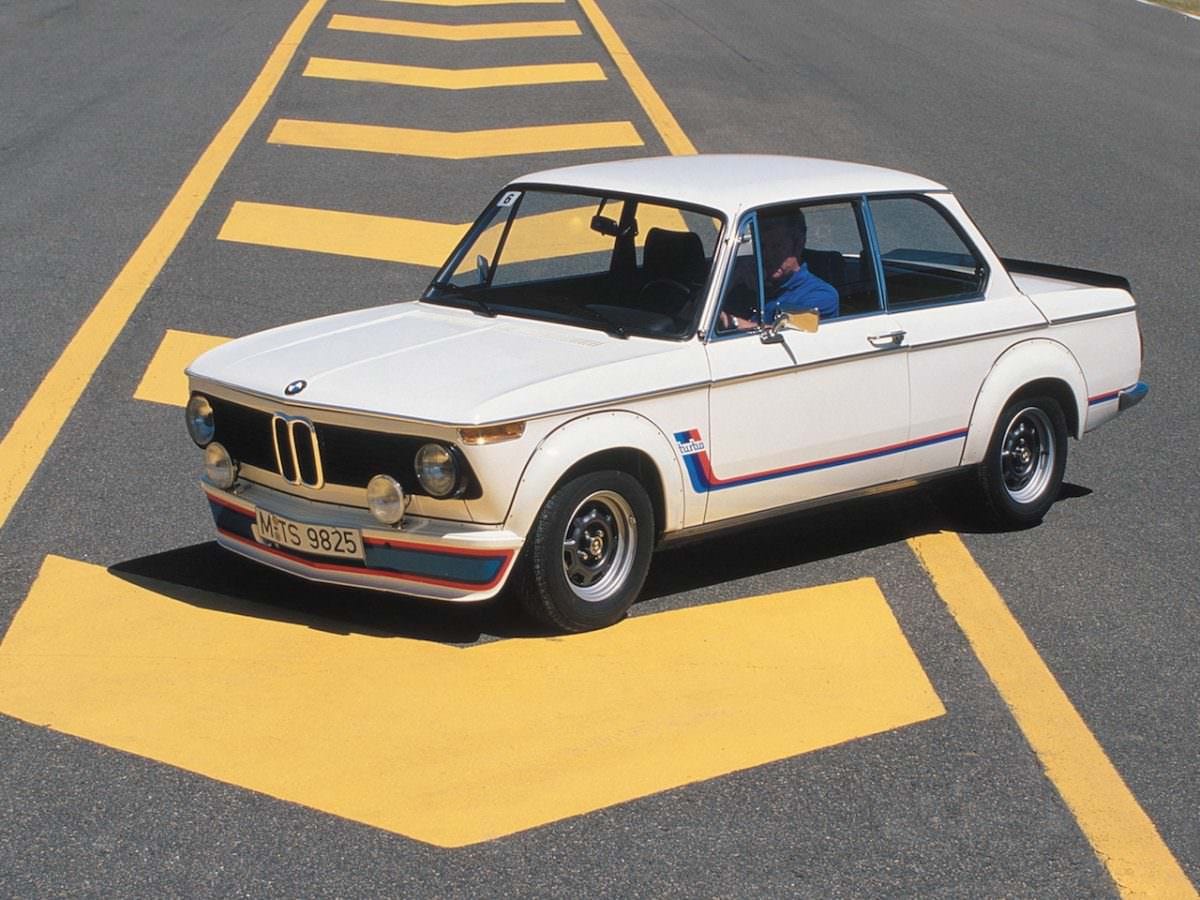
BMW 2002 Turbo (1973–1974): The First European Turbocharged Production Car
BMW built 1,672 of the 2002 Turbo. It was the first European production car with a turbocharged engine - a technical decision made in the year the oil crisis arrived, which was commercially catastrophic and historically significant. The turbo came on boost at 4,000 rpm, which in 1973 made it genuinely demanding to drive well. BMW discontinued it after 16 months. In retrospect it is the engineering proof of concept that made the M-series possible.
Investment: EUR 60,000–120,000 for well-documented original examples. The 2002 Turbo is the most desirable variant of the 2002 family and prices have reflected this for a decade. The reversed front spoiler lettering - “2002 turbo” readable correctly only in other drivers’ rear-view mirrors - was either a marketing decision or a statement. It reads the same way either way.
Where to Find: Ask and we will connect you
🔍 The Find: An Undervalued Category from the Archive
A weekly note from TGC’s research desk on a collecting category worth knowing about.
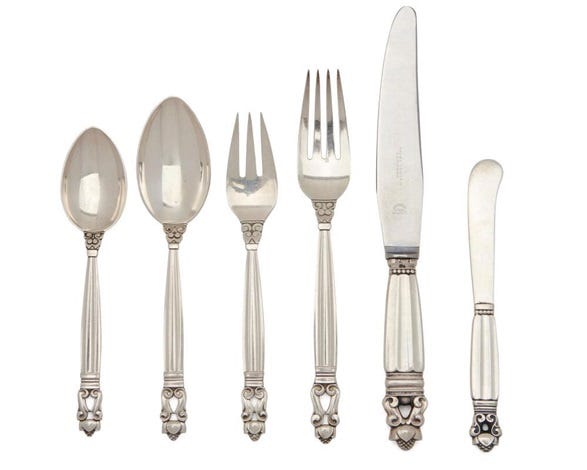
Georg Jensen, Acorn Pattern, pre-1920 (Denmark)
Johan Rohde designed the Acorn flatware pattern for Georg Jensen’s Copenhagen workshop in 1915. It remains in production today - one of the longest continuously produced flatware patterns in Scandinavian silver. The pre-1920 pieces, identifiable by the original Georg Jensen hallmark, are the collecting opportunity.
Georg Jensen was absent from every German Werkbund publication. He was not a Werkbund member. He was working in Copenhagen, at precisely the same moment, on precisely the same formal problems as Hoffmann in Vienna and Riemerschmid in Dresden, without the institutional affiliation that creates canonical status in the auction market.
The result is a direct pricing gap. A Josef Hoffmann Wiener Werkstätte covered box from 1910–1914 realises EUR 3,300–8,450 at Dorotheum in Vienna, because the canonical attribution is intact. A Georg Jensen pre-1920 piece of equivalent craftsmanship trades at EUR 500–2,500 at Bonhams London, because the continental European market does not extend a Copenhagen premium to silver outside Scandinavian auctions.
The quality is the same. The bibliography is different. The gap is the opportunity.
🏠 Heritage Real Estate
Heritage Real Estate returns soon.
Guest contribution: Lindsay Mattinson, Mattinson Associates
🌟Recommending people from my Network:
Cars (USA): Mike Calcara | Website
Business Broker (USA): Jackie Ossin Hirsch | Website
Tatoos (USA) as Art: Nahuel Hilal | Website
Contemporary Private Art Advisor : Diana Wiegersma
Mattresses (USA): Nick Hancock | Website
Luxury Villa Rentals Portfolio (USA - Miami): Parker Little | Website
Architect (UK): Lindsay Mattinson | Website
Expats Insurance Broker: Quinn Miller | Website
Ferrari (France - Cote d’Azur): Stewart Begg | Website
Private Aviation Financing: Preston Holland | Website
Sports Legend & Motivational Speaker: Bob Skinstad | Podcast
GT Car Tours & Events: Robert Crosthwaite Eyre | Website
🏷️📈The Private List: Marketplace
Browse, buy, and sell vetted investment-grade assets: marketplace.thegatekeepers.club

The margin between 122 years and two million is not a number. It is a decision about what you are willing to accept. Strehler did not engineer the Sauterelle because the market asked for a more precise moonphase. He engineered it because he found the existing precision inadequate. The watch is the argument, made in steel and gold.
Until next Friday,
Christian | GenxBonVivant